Collective Mobilites
Collective Mobilities is a socially engaged mobile project that facilitates redistribution and mutual aid to support people experiencing homelessness. The work was initially on view at the Pratt Institute's DeKalb Gallery in Brooklyn from February 3 to March 9, 2025. Homelessness is often stigmatized and framed as a problem to be solved by city agencies alone. This project challenges that perspective, emphasizing the shared responsibility of New Yorkers to address homelessness amidst the systemic inequities and dehumanization of people dealing with housing insecurity. By forging partnerships among students, mutual aid groups, city workers, and researchers, Collective Mobilities demonstrates the transformative potential of creative, community-driven care and alternative economies.
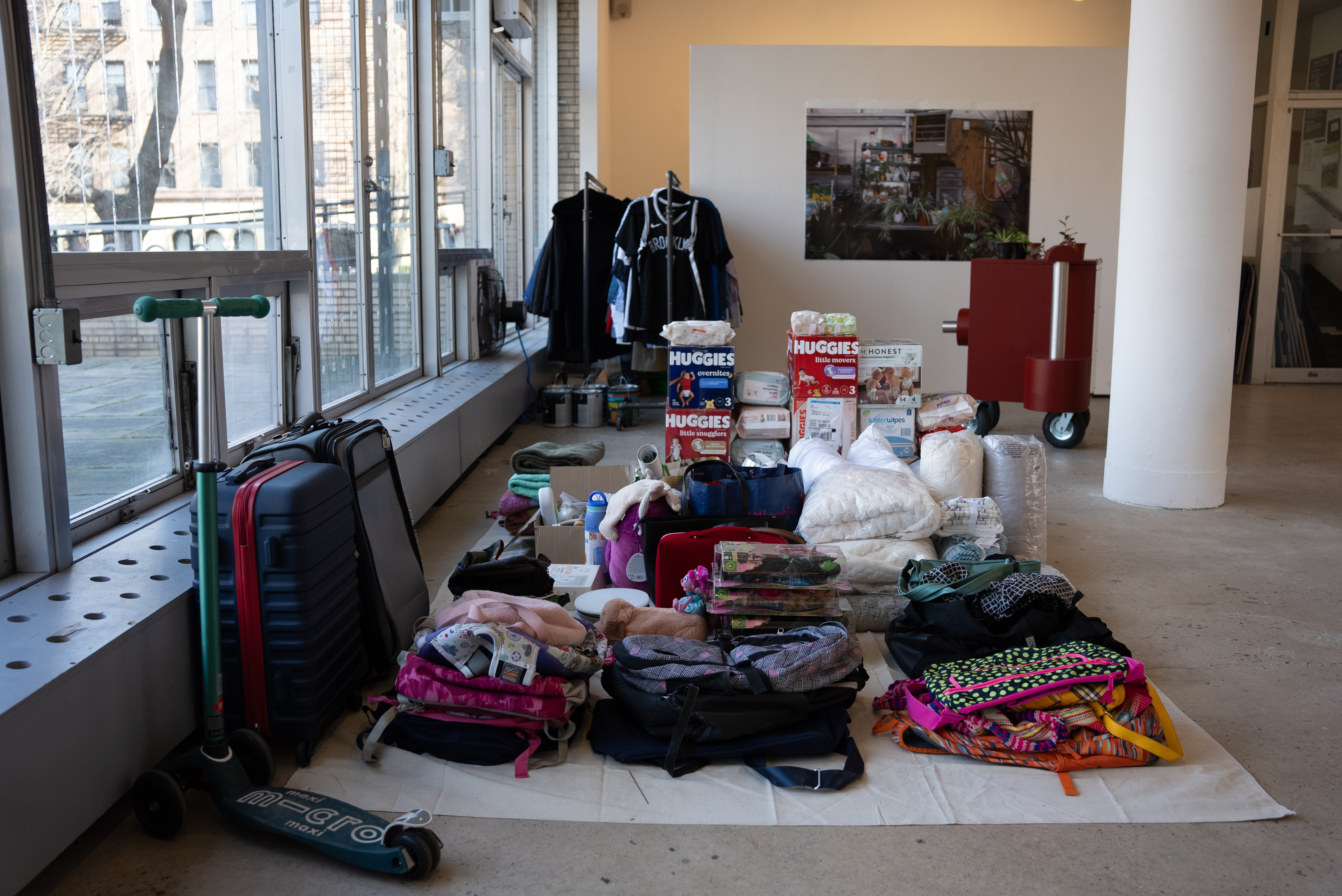
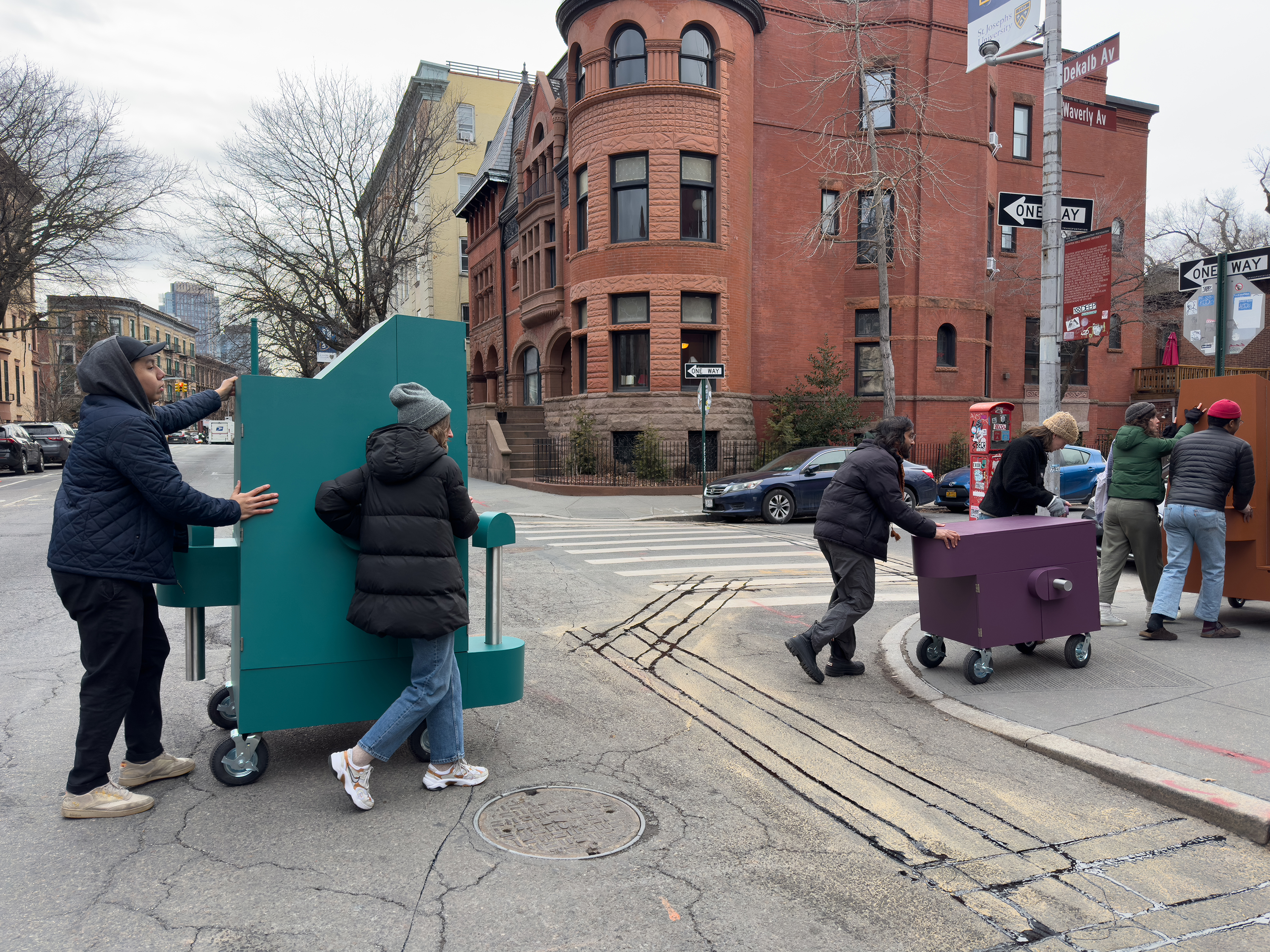
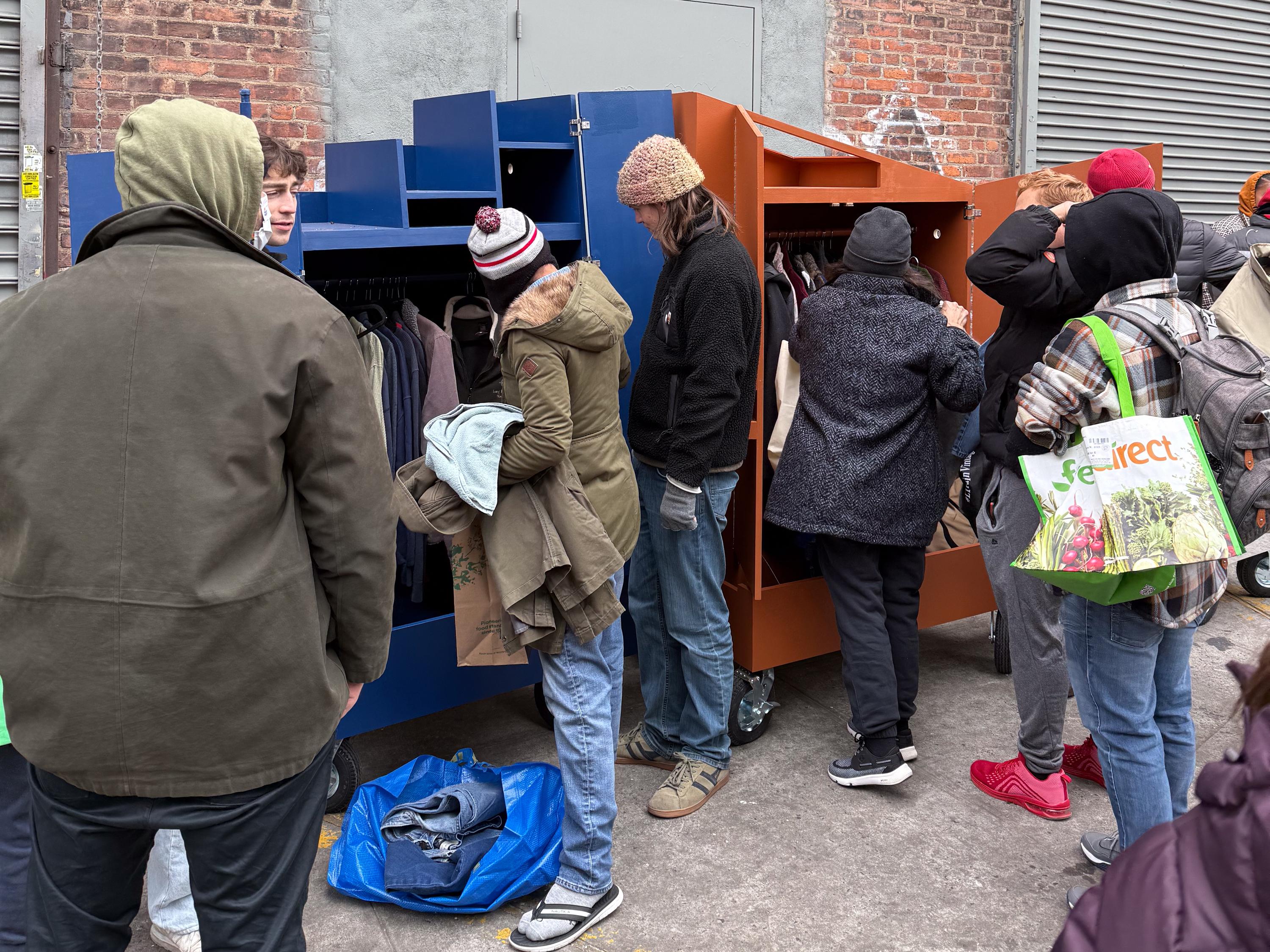
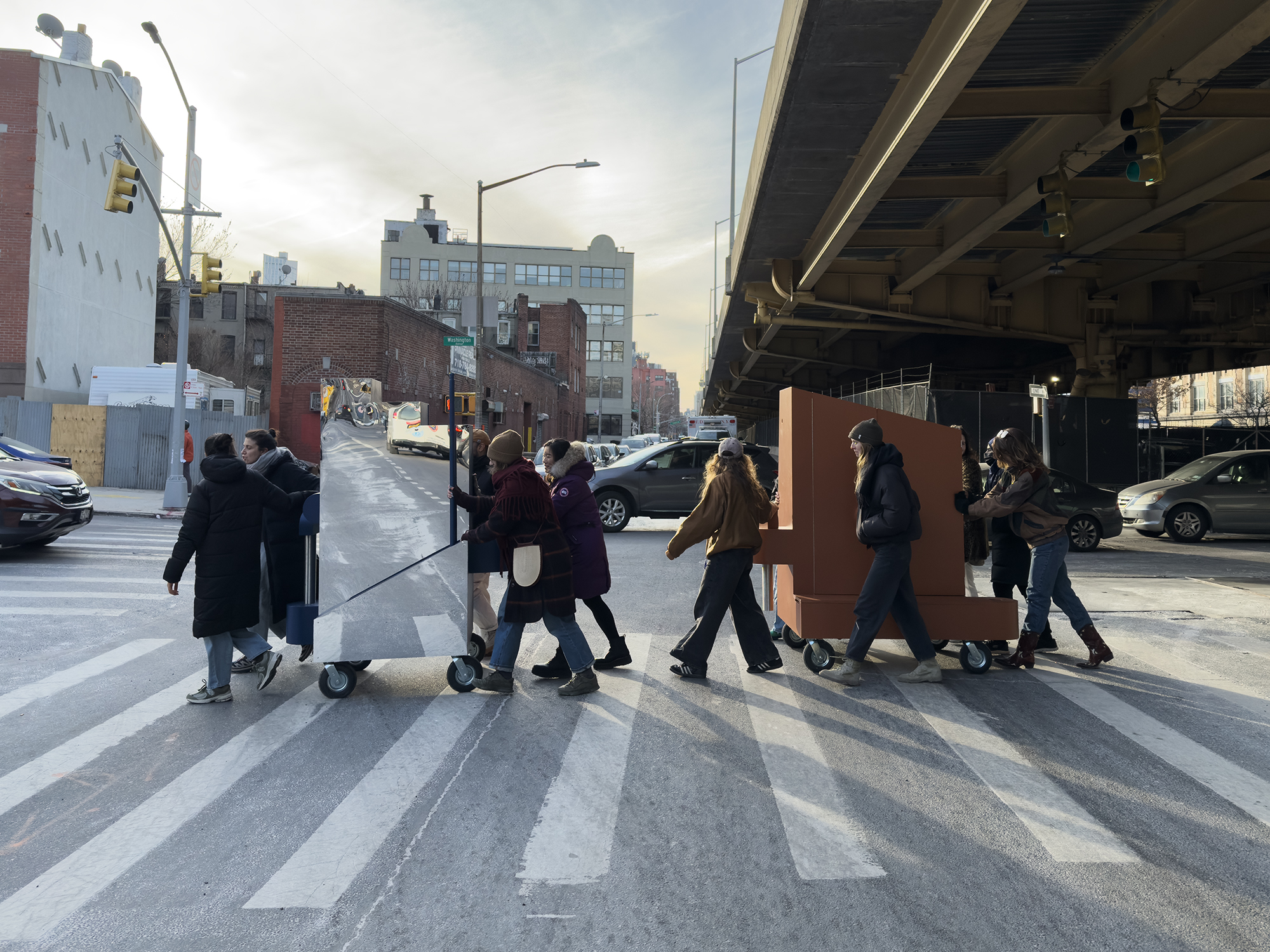
At the core of the project are Mutual Aid Mobiles, a series of five colorful, portable sculptures designed with trained architect Ekin Bilal to gather and distribute lightly used clothing and essential goods. Throughout the exhibition, the gallery became an active collection site, where each donated item was cleaned and repaired as needed. Visitors could come to the gallery to “shop” at no cost during open hours. Each week, I collaborated with students and volunteers to wheel the mobiles, loaded with donations, to a nearby mutual aid group I help organize that serves people living in migrant shelters for direct and immediate redistribution. The backs of each sculpture are mirrored, reflecting the city as the objects move while also providing a practical surface for people to hold clothes up to. Throughout the duration of the DeKalb Gallery iteration, over 8,000 items were collected and redistributed.
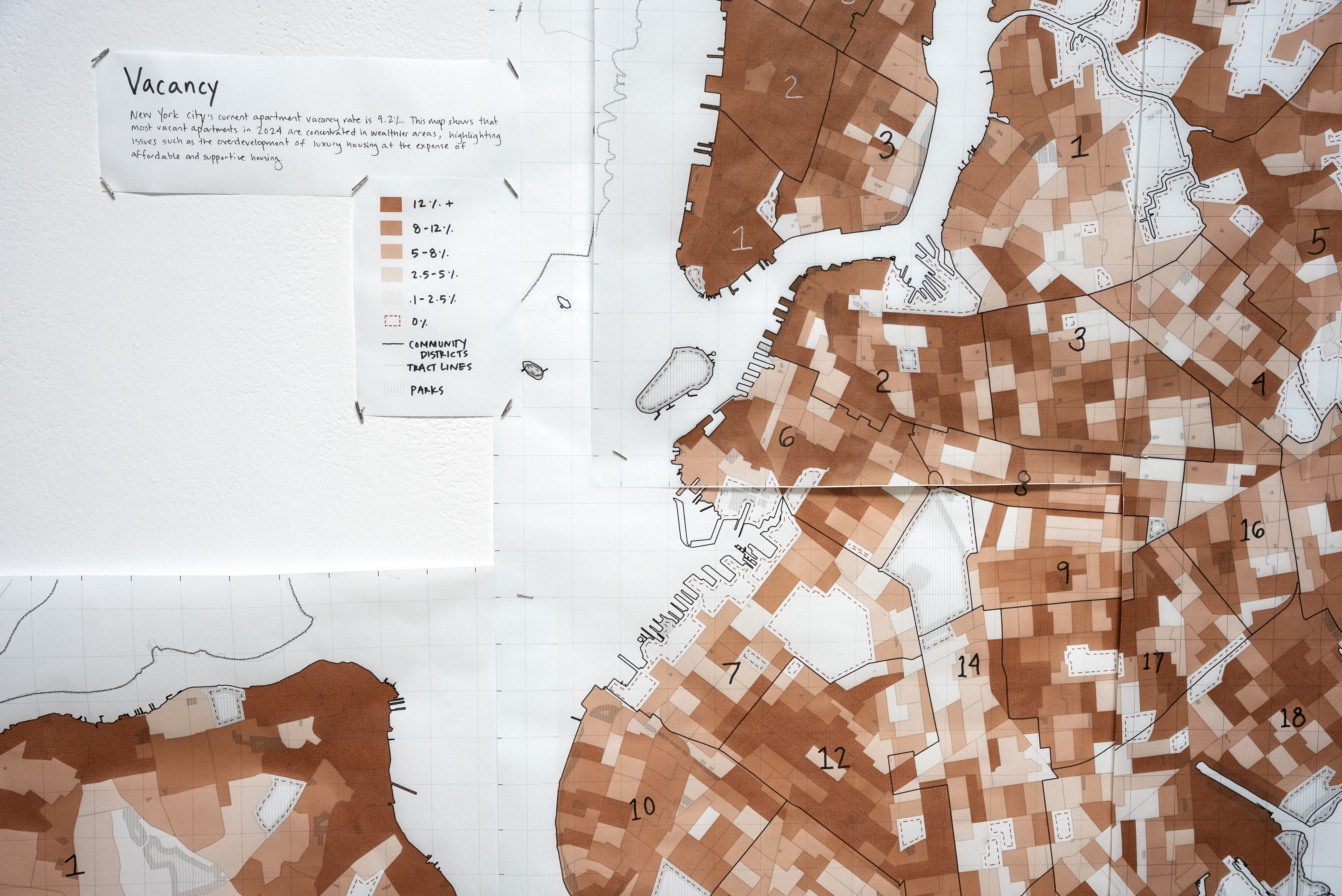

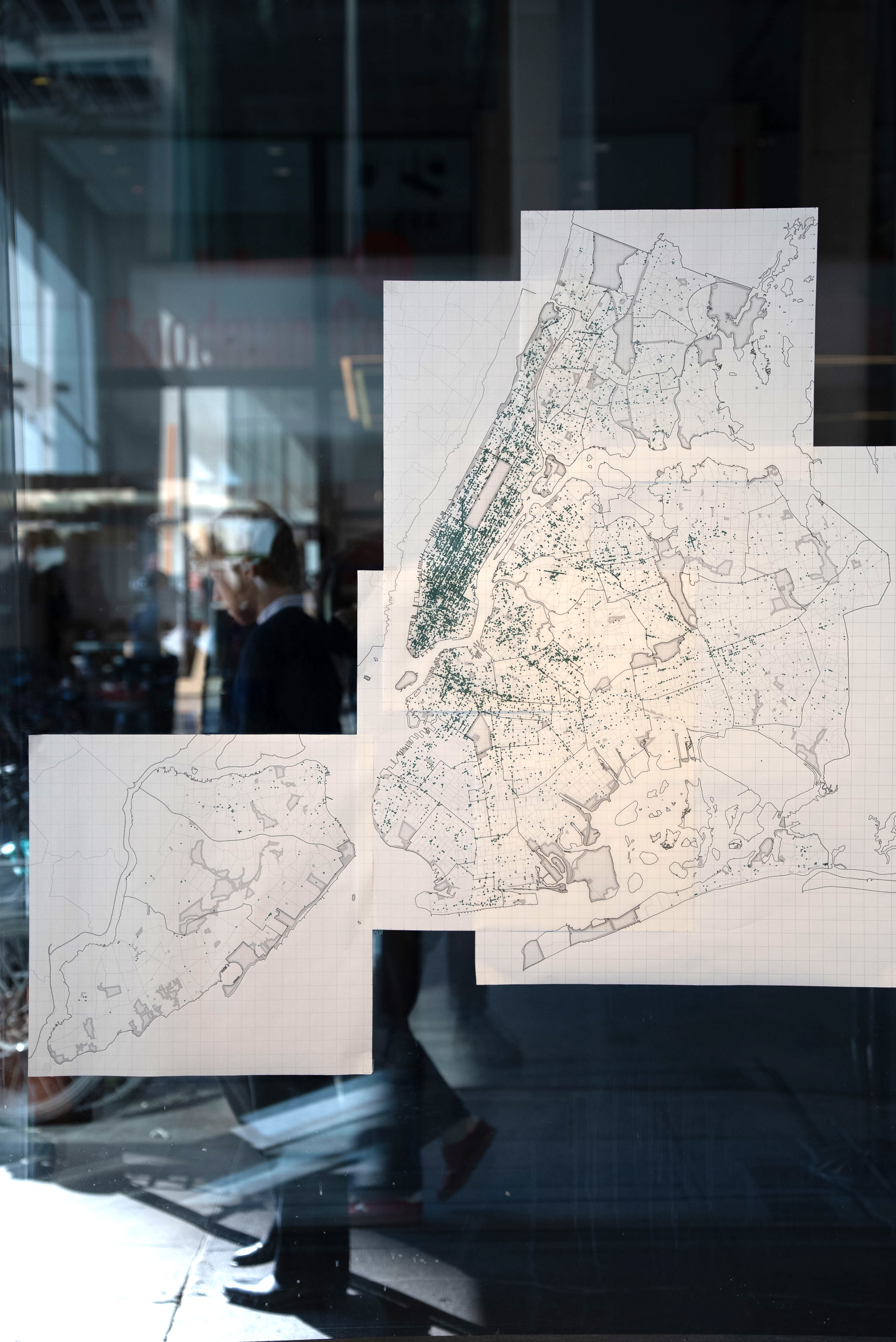
When displayed in the gallery, the mobiles were adorned with plants cultivated by participants in a horticultural therapy program grounded in harm reduction at Project Renewal’s Recovery Center, located at the Third Street Men’s Shelter in Manhattan. The plants were available for sale, with all proceeds going directly to support recreational activities chosen collectively by the program participants. Lining the walls of the exhibition were maps conveying critical information for understanding homelessness in relation to apartment vacancy, the segregated locations of shelters across the city, and non-emergency 311 complaints throughout 2024 that were tagged with “homeless.” I worked with data scientists John Lauerman and Yuanhao Wu to collect and synthesize this information. The printed GIS and hand-drawn maps on view mirrored the palette of the mobiles, situating data as inextricably linked to action.
The mobiles continue to be used as part of mutual aid organizing efforts, and were included as part of the Adapt/Evolve exhibition at the Fashion Institute of Technology Gallery in Manhattan, a group show focused on interdependence and access.